A LITTLE BIT MORE
As a photographer, are you a "witness to your time?" Click here to see and learn about Charles W. Cushman, an inspiring witness.
There's so much more to learn from the The Charles W. Cushman Photograph Collection, housed at Indiana University. Archival image researcher Rich Remsberg, whose voice you heard above, has an introductory essay. And historian Eric Sandweiss brings it to life in his book, The Day In Its Color, (Oxford University Press, 2012).
But the most helpful guide to these photos was left by Cushman himself. He took meticulous notes about each and every photograph, filling dozens of notebooks with details about where he was and when. So, for example, we know that the Golden Gate Bridge photo was taken on a cloudless day in September, 1938… and 1953 and 1954… and 1968. You get the point.

Although the bridge, as a recurring image, stays consistent over three decades, the things surrounding it don't. Cushman's cars change. So do his clothes. America evolves before our very eyes — if we're patient enough to wade through hundreds of images in chronological order. New railroads influence commerce, highways connect people and machines replace horses. Cushman saw it happening and, for whatever reason, felt compelled to document history as it unfolded. That's what separates him from the vacation photographer: Why else would someone photograph a smokestack outside of Chicago?
There's a tidy organization to Cushman's photos, but there's also a serendipity. Dig around the archives and you'll unearth lush landscapes, impressionistic florals and self-portraits that, with hindsight, we can describe as brooding.
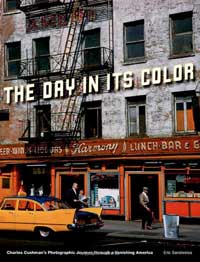
As Sandweiss explains, Cushman's photographs were mediated by his tumultuous marriage with Jean. He was born in the very small town of Poseyville, Indiana, but married into an established Chicago family. Jean was cousins with John Steinbeck, incidentally; and she came undone after her father's death. From then on, it seems, Cushman's photographs gave him a kind of therapy.
We do the same thing today. We put frames around moments to make sense of them — to make them last. Although these days, it's easy to create 14,500 images in an aggressive week of digital shooting. We capture everything — from birthdays to sunsets to what's for lunch. But Cushman provokes a question: Are we just making noise, or are we really processing the passage of time?
"He's a great reminder…" Remsberg says, "that photography is not a contest. … It's about being a witness to your times."
So: Are you a witness?
